


A Brief History of San Sebastian
By Mattin
San Sebastian is known today for its beautiful beaches, elegant architecture and, of course, its food. Set around La Concha Bay, on the northern coast of Spain and only a few kilometres from the French border, the city has become one of the most popular destinations in the Basque Country.
The Basque Country has a strong culture of its own and also its own language. Basque, or Euskara, is unrelated to Spanish or French and is widely spoken in and around the city. This is why you will often see San Sebastian referred to by its Basque name, Donostia.
Two names that might seem to have very little in common. We will come back to that later.
The history of San Sebastian goes back almost a thousand years and has always been closely connected to the sea. It developed as a medieval port and fortified town, was almost completely destroyed in 1813 and changed enormously during the 19th century, when it became one of Spain’s most fashionable seaside destinations.
The story starts with a small monastery beside the bay.
Before the City, the Monastery of San Sebastian
Before San Sebastian existed as a town, there was already a small religious settlement on the shores of the bay.
Medieval documents mention a monastery dedicated to Saint Sebastian in the area now known as El Antiguo, literally meaning “the old one”, close to where Miramar Palace stands today.
Its location was not accidental. The monastery stood close to what would become part of the Camino de Santiago, the pilgrimage route followed for centuries by travellers making their way to Santiago de Compostela. It probably offered shelter and assistance to some of those travelling west along the northern coast, a route that still passes through San Sebastian today.
At that time there was no city around it, just a small settlement beside the bay. The San Sebastian we know today would begin to take shape later, on the opposite side of La Concha, beneath Mount Urgull. The old monastery, however, would leave something behind: its name.
A Medieval Port
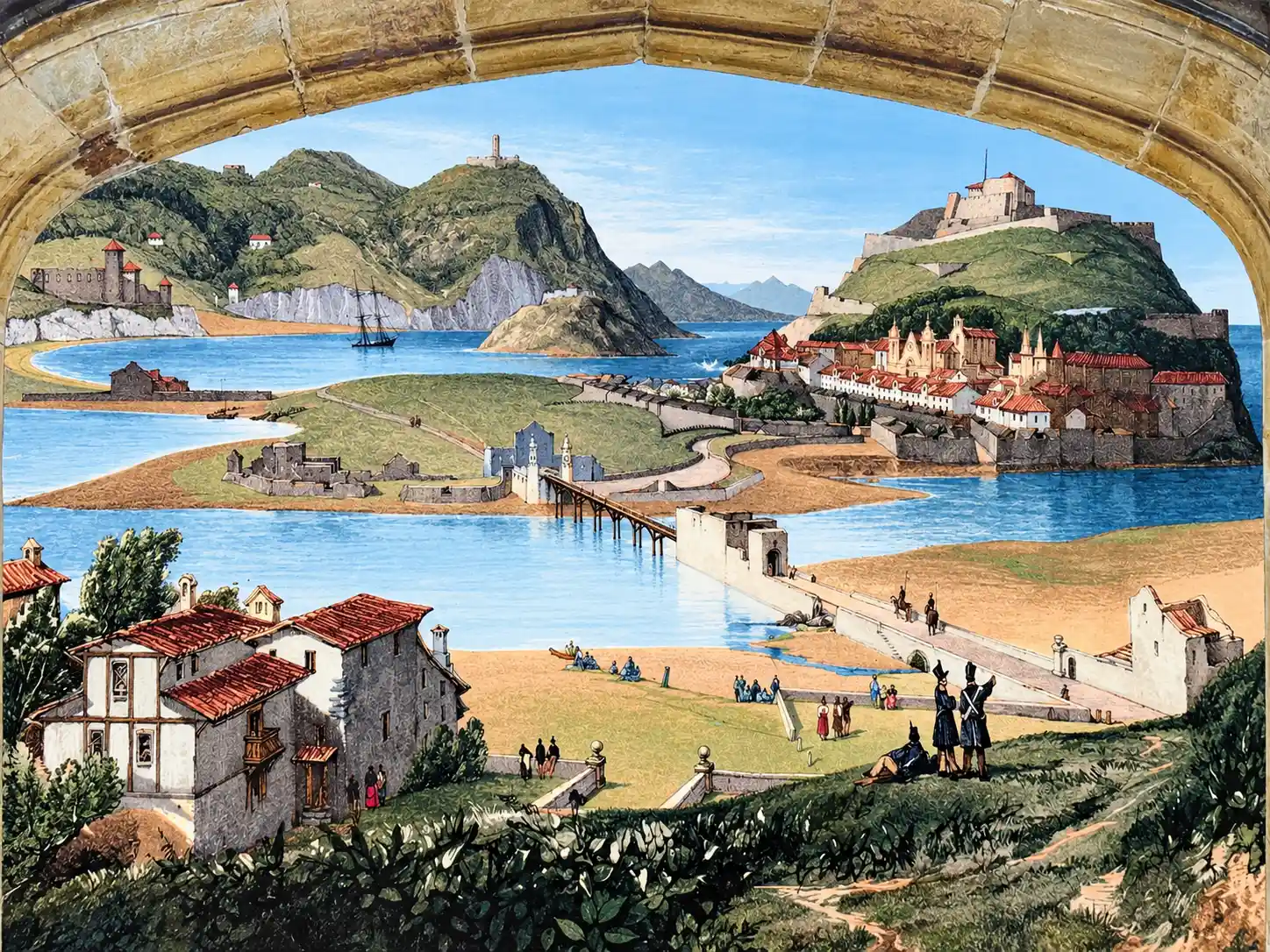
In the late 12th century Sancho VI the Wise, King of Navarre, granted San Sebastian its town charter. Traditionally dated to around 1180, this is generally considered the foundation of the town.
Its location was especially important for the Kingdom of Navarre because it provided access to the Bay of Biscay and the Atlantic Ocean.
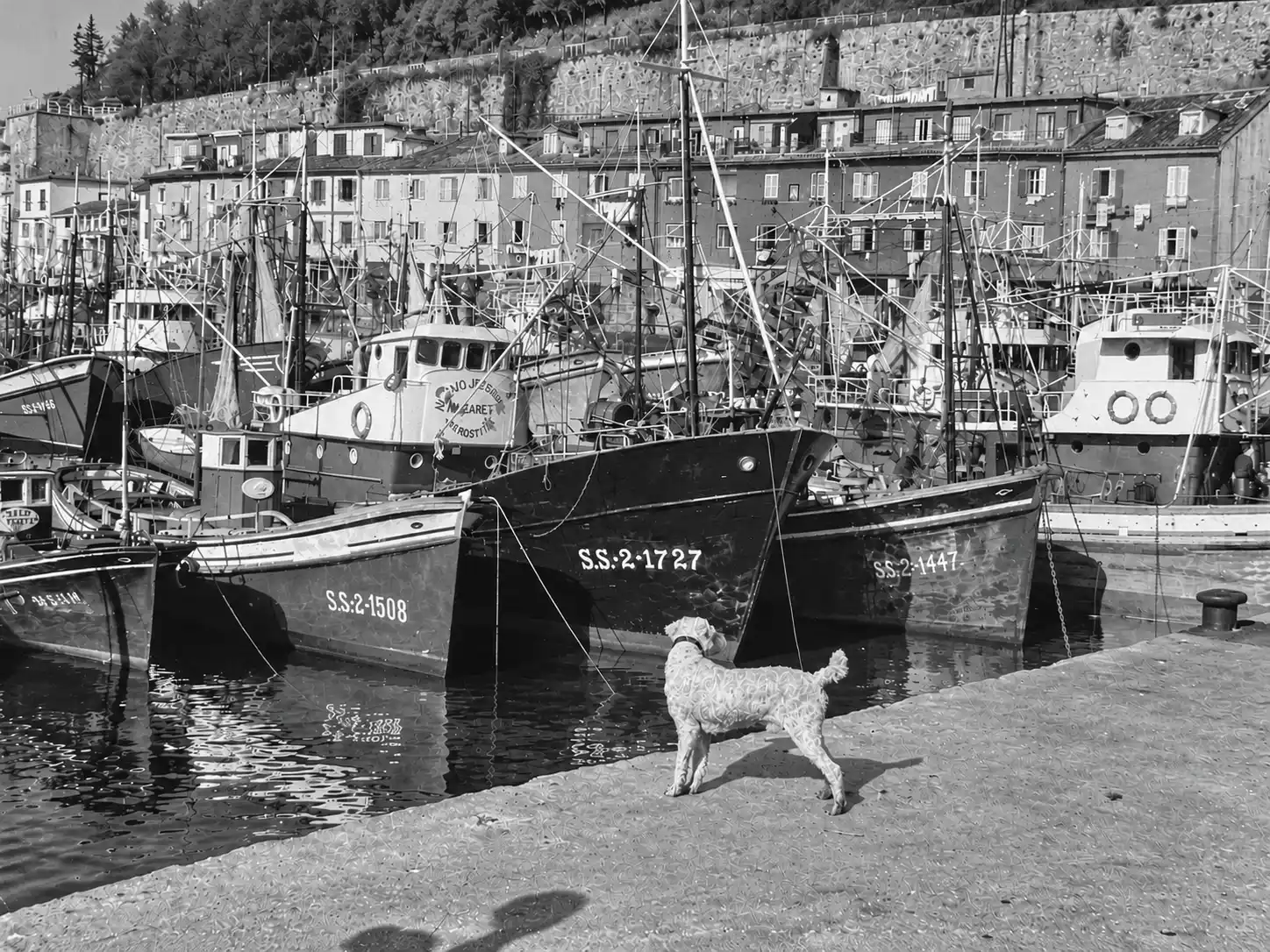
Protected by Mount Urgull, the settlement developed around maritime trade and fishing. Basque sailors would later travel far into the Atlantic in search of whales and cod, part of a maritime tradition that became very important along the Basque coast.
San Sebastian also developed as a fortified town. Its location close to the French border made it strategically important and for centuries the town remained surrounded by defensive walls.
Wars and sieges were a recurring part of its history, but the events of 1813 would change the city completely.
1813, the Burning of San Sebastian
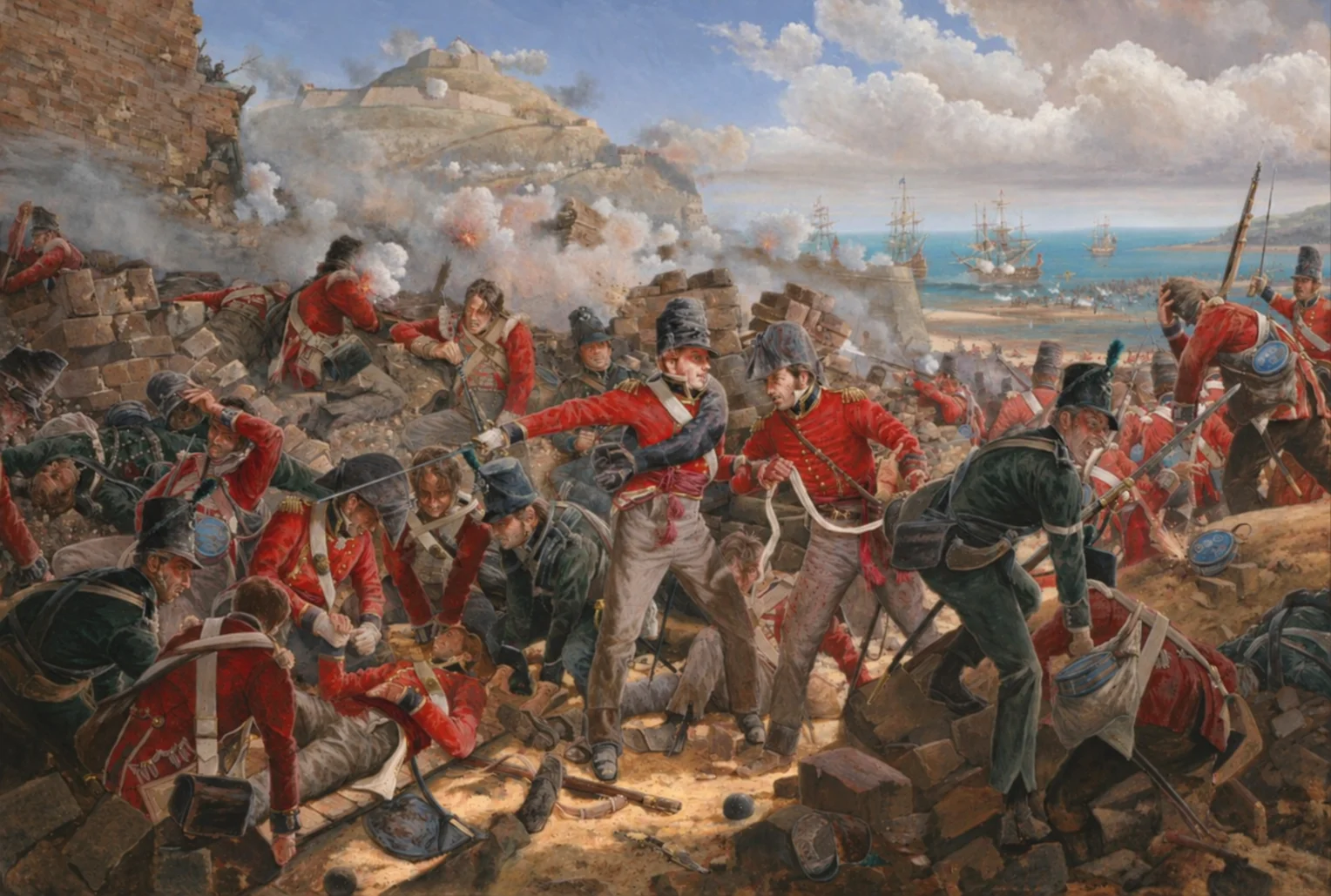
The most important of these conflicts came during the Peninsular War, when San Sebastian was occupied by French troops. By the summer of 1813 the French army was retreating and British and Portuguese forces under Wellington arrived at the city, which was still protected by its walls.
After weeks of fighting they finally entered San Sebastian on 31 August 1813. What followed was one of the worst moments in the city’s history. The Allied troops looted the town and a fire destroyed almost everything inside the walls. The date is still remembered today in 31 de Agosto Street, one of the few parts of the Old Town that survived the fire.
Just a few days later representatives of the city met in nearby Zubieta and agreed to rebuild San Sebastian in the same place. The city was rebuilt, but during the following decades it would change much more than anyone at that meeting could probably have imagined.
The 19th Century and Modern San Sebastian
The 19th century is probably the most important period for understanding the San Sebastian we see today.
After 1813 the city was rebuilt within the same defensive walls that had surrounded it before the fire. For a while this worked, but as San Sebastian grew there was simply not enough space and its old military role was becoming less important.
The walls were finally authorised for demolition in 1863, with the work beginning the following year. San Sebastian could now grow southwards, beyond the Old Town, following a new plan of wider streets, avenues and squares.
You can still see this change quite clearly today. Walk out of the narrow streets of the Old Town and within a few minutes you are surrounded by the much wider and more regular streets of the 19th-century city.
This expansion also happened at a time when San Sebastian was beginning to attract new visitors.
Sea Bathing, Royalty and the Belle Époque
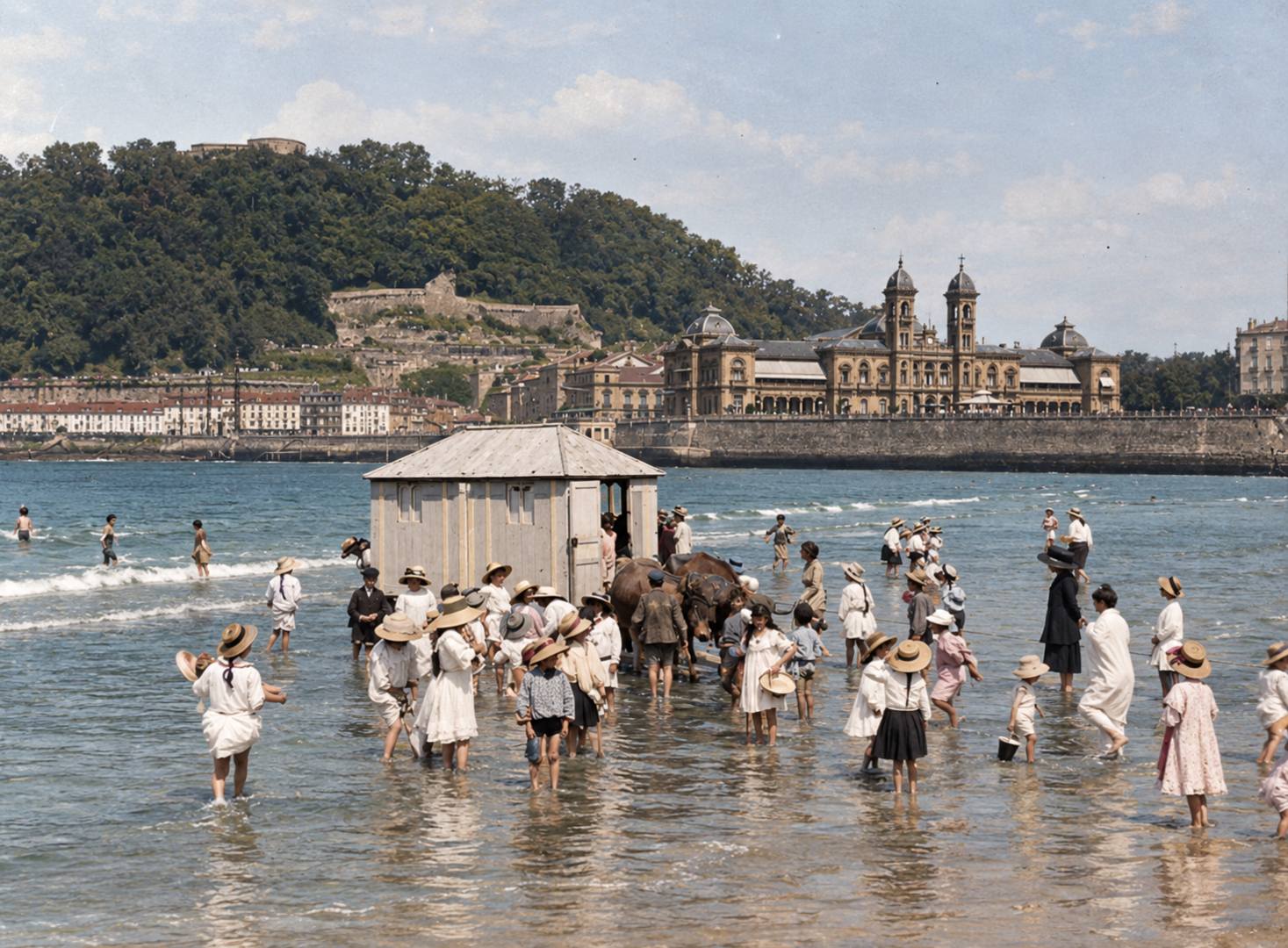
Sea bathing had become fashionable among the European upper classes during the 19th century. Going to the coast was increasingly associated with health and well-being and seaside towns started to develop as summer destinations.
San Sebastian had La Concha, a large sandy beach protected by the shape of the bay, and it soon became part of this new fashion.
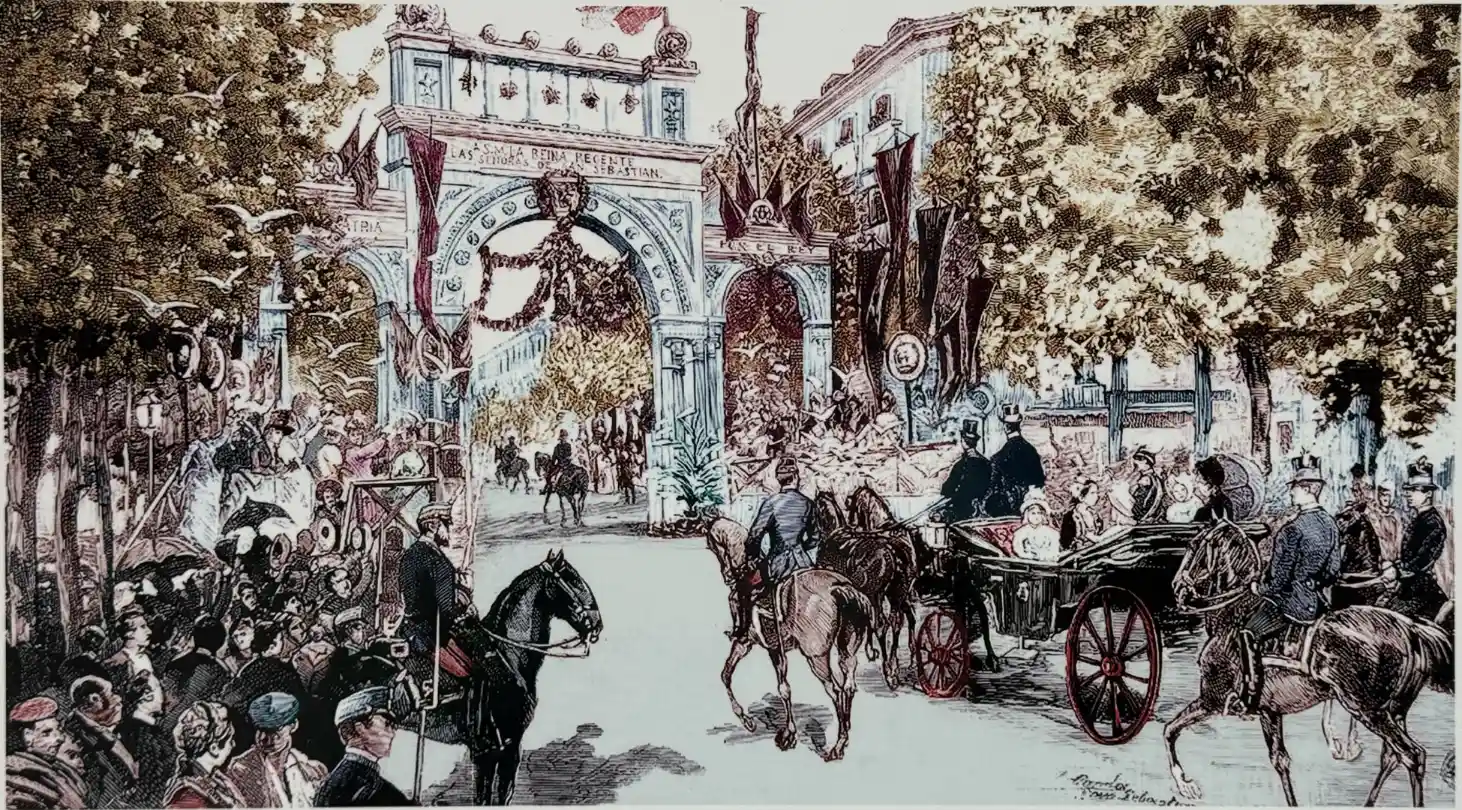
Queen Isabel II was one of the people who helped make sea bathing popular here. Later Queen Regent Maria Christina of Austria began spending her summers in San Sebastian and the Spanish royal court followed her.
The city changed with them. New hotels and villas appeared, together with gardens, theatres and places for entertainment. The Grand Casino, which is now the City Hall, opened next to La Concha in 1887, while the Victoria Eugenia Theatre and Hotel María Cristina arrived in the early 20th century.
The royal family chose Miramar Palace as its summer residence. Interestingly, it was built very close to the place where the old Monastery of San Sebastian had stood centuries before.
By then the small fortified town had become a very different place.
From Seaside Resort to Food Destination
San Sebastian entered the 20th century as one of Spain’s best-known seaside resorts. Its beaches and elegant architecture are still part of its image today, but over the years food has become just as important.
Gastronomy has a strong social side in Basque culture. Markets and traditional restaurants are part of it, but so are the gastronomic societies, private clubs where people meet to cook, eat and spend time together.
During the 20th century this local food culture also developed in new directions.
Pintxos and San Sebastian
This is when the pintxo culture that San Sebastian is known for today began to take shape.
The first pintxos were generally simple, with small portions of food served at the bar, often on a piece of bread and sometimes held together with a cocktail stick. Over time the way of eating them became almost as important as the food itself, moving between bars and having a pintxo and a drink in each one.
One of the best-known examples appeared in San Sebastian in the 1940s. The Gilda combines an olive, salted anchovy and pickled green chilli on a cocktail stick. Its name was inspired by Gilda, the film starring Rita Hayworth, with the pintxo traditionally described as green, salty and a little spicy.
Pintxos have changed a lot since then, but going from bar to bar is still very much part of the food culture of the city.

New Basque Cuisine
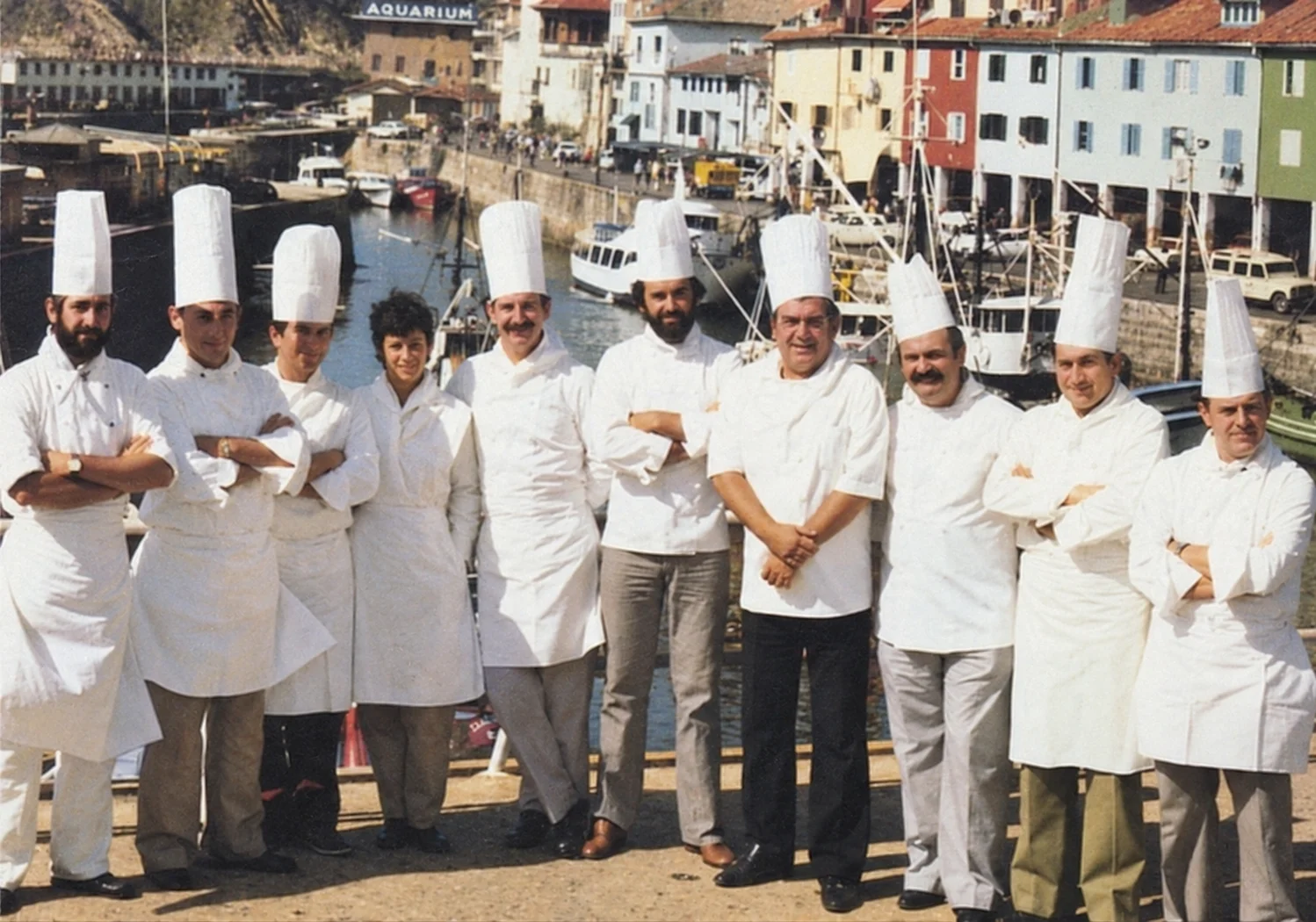
A few decades later, in the 1970s, a group of Basque chefs including Juan Mari Arzak and Pedro Subijana began experimenting with new ways of cooking the food they had grown up with.
They looked across the border to the Nouvelle Cuisine developing in France, while continuing to work with Basque products, recipes and flavours. The movement became known as New Basque Cuisine and had a major influence on restaurants in San Sebastian and across the Basque Country.
Today the city is famous for its Michelin-starred restaurants, but that is only one part of its food culture. Traditional restaurants, markets, gastronomic societies and small bars are just as much a part of eating in San Sebastian.
Why Is San Sebastian Called Donostia?
There is still the question we left at the beginning. Why Donostia? The answer takes us back to the small monastery where the story started.
The monastery was dedicated to Saint Sebastian and in old Basque Done was used before the names of saints. Saint Sebastian was therefore known as Done Sebastian.
With centuries of use and changes in pronunciation, the name evolved through forms such as Done Sebastian → Donebastian → Donostia.
So the two names that seem so different when you first arrive in the city actually come from the same place.
The monastery is long gone, but its name is still here every time someone says Donostia.
Discover Donostia with Ikusnahi
There is much more to Donostia than its Old Town and La Concha. On our cultural tours we explore different parts of the city and the stories behind them, from its historic streets and 19th-century architecture to the surfing culture of Gros, the views from Mount Igeldo and the modern art that has become part of the coastline.
And of course there is the food. Our pintxo tours in San Sebastian are not only about pintxos. They are also a chance to discover Basque cooking, local products, wine and craft beer and to understand why food has such an important place in life here.
Whether through its history, its neighbourhoods or its food, our San Sebastian day tours are designed to show you different sides of Donostia and what makes the city special to those of us who live here.
Discover our wide range of tours in the Basque Country and experience a different way of exploring this incredible region.
On our blog, you can read other related articles, such as the one where we discuss the best time to go to San Sebastián.


 Whatsapp